Knowledge

Key technology – power-to-gas

Power-to-gas is produced from renewable energies and can be used in many different ways.

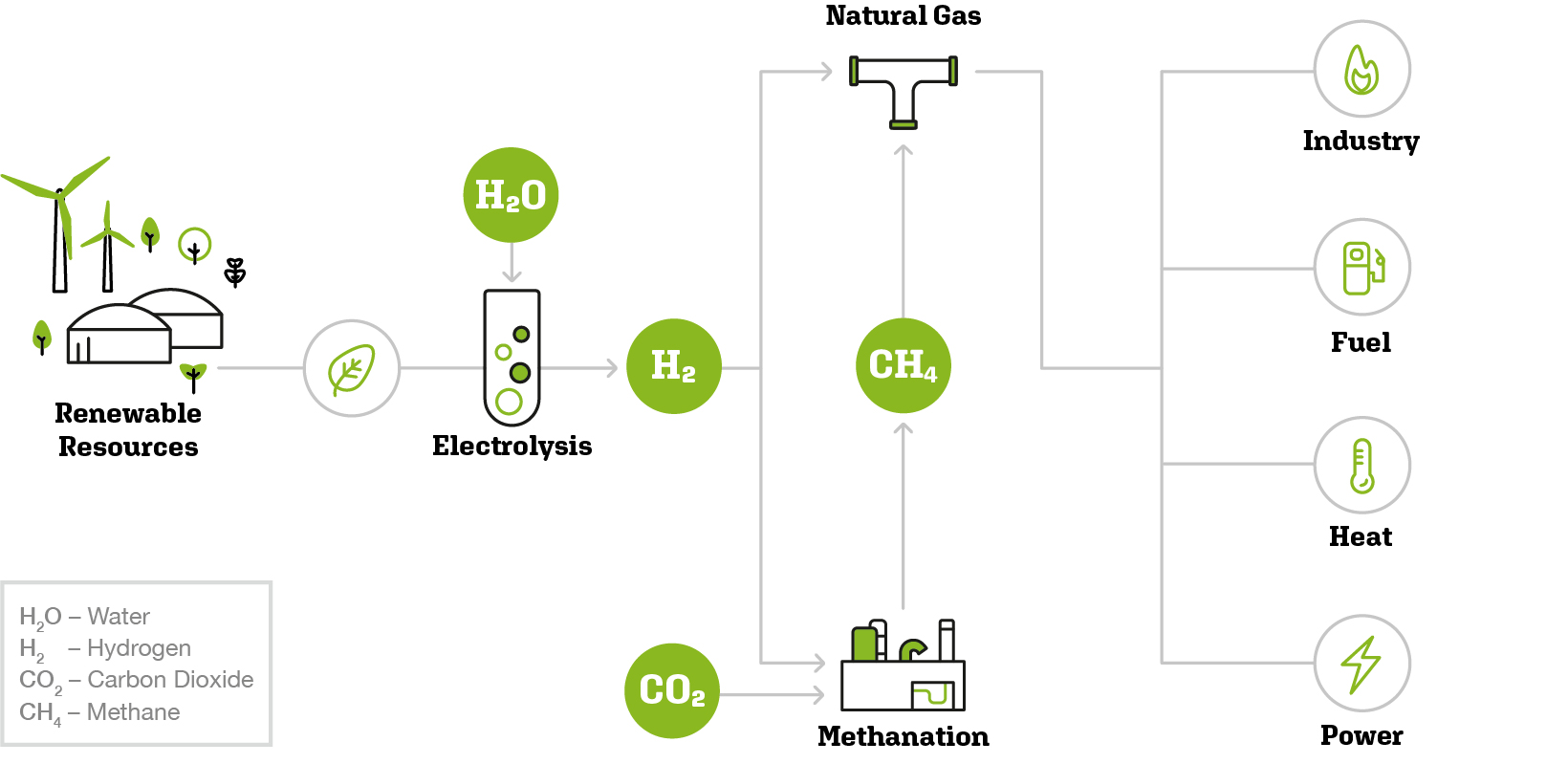
bmp greengas | Infografik Green Gas

Power-to-gas uses excess electricity from renewable sources

In power-to-gas (PtG) facilities, hydrogen is produced from water through electrolysis using surplus electricity from renewable energy sources such as wind and solar power. The hydrogen can either be used directly or converted into biomethane in a second step using renewable carbon dioxide. Due to its synthetic production process, this gas is referred to as Bio‑SNG (Synthetic Natural Gas).

Power-to-gas and different application areas

Power-to-gas technology can be used across a variety of sectors. In addition to the use of hydrogen and Bio‑SNG as energy carriers or storage media, the process can also be used to produce power-to-liquid products, including fuels and basic chemicals.

Applications range from heat and power generation to uses in the chemical industry, shipping and road transport.

Power-to-gas and energy storage

Without storage solutions, surplus renewable electricity cannot always be used when it is generated. Power-to-gas technology converts electrical energy into gaseous energy carriers that can be stored and used at a later stage.

Power-to-gas facilities can process large volumes of electricity and provide flexibility services to respond to fluctuations in electricity generation and demand.

Power-to-gas and sector coupling

Sector coupling aims to connect different parts of the energy system through the integrated use of renewable electricity and renewable carbon sources. It links sectors such as heat, power, mobility, industry and buildings, with electricity acting as the connecting element between them.

The objective of sector coupling is to enable the broader use of renewable energy across different applications while integrating energy production, storage and consumption across sectors.

Power-to-gas in the energy system

Power-to-gas is one of several technologies used to link renewable electricity generation with gaseous energy carriers. It enables renewable electricity to be converted into hydrogen or Bio‑SNG for use in sectors such as heat, transport and industry.

Power-to-gas projects in Germany

Germany is home to numerous power-to-gas pilot and demonstration projects. Companies, research institutions and technology providers are testing new processes, components and operating concepts. Sector-coupling projects are also being supported through a range of research and innovation programmes.

Power-to-gas activities can also be found in countries including the United States, Japan, Australia, Denmark, Iceland and Switzerland.